Born For A Busy House
Raised in a lively terraced home in Swansea, Maggie learns early that the kettle is always on and there is room for one more at the table.

Eight decades of laughter, marriage, work, family life, seaside holidays, unshakeable opinions and one woman’s enduring belief that a proper cup of tea can sort most things out.

Born Margaret Evans in 1946, Maggie has never been one for sitting quietly in the background. This is the story of a woman who has built a proper life: full of family, work, laughter, good manners, strong tea and just enough mischief to make everybody behave.
Raised in a lively terraced home in Swansea, Maggie learns early that the kettle is always on and there is room for one more at the table.
She meets George at a Saturday-night dance in 1965. He offers to buy her a lemonade. They marry two years later and are still a formidable double act.
Mum to Linda and Paul, Nan to four, and the person everyone rang when life got complicated, exciting or mildly ridiculous.
A small collection of the qualities that make Maggie impossible to overlook and very difficult to get anything past.
News, visitors, a burst pipe, a birthday or a family argument. Maggie’s first instruction was always: “Put the kettle on.”
Her roses are the pride of the street. Her geraniums are judged more seriously than most local elections.
Victoria sponge, Welsh cakes and Christmas shortbread. The family knows better than to arrive late when Maggie has been baking.
Maggie grows up near the docks in Swansea with her parents, Albert and June, and two brothers who are forever under her feet. She is the girl who keeps a tidy bedroom, knows exactly where the good biscuits are hidden, and has a habit of telling grown-ups what they should do next. Some things are simply born fully formed.
After leaving school, she works first in a busy department-store café, where she learns to remember regulars’ orders and smile politely at people who want six changes to a simple breakfast. Later she becomes a receptionist at the local health centre, a job she holds for more than twenty years and does with enormous care.
She meets George Wilkins at the Pavilion dance hall in 1965. He is nervous, wears a shirt his sister has ironed, and asks her to dance because she looks like she knows the words to every song. She does. They marry in 1967, buy their first little semi-detached house three years later, and make it their own one paint tin and one increasingly ambitious curtain decision at a time.
Linda arrives in 1970 and Paul in 1973. Maggie becomes the kind of mother who attends school plays, packs proper lunches, knows every teacher by name and can produce a clean PE kit from nowhere. Family holidays are usually caravan trips to Tenby or coach breaks to Weston-super-Mare, where George takes the photos and Maggie packs enough sandwiches for a small expedition.
As the children grow, Maggie goes back to work and gradually becomes the person everybody at the health centre relies upon. She has time for the anxious, patience for the confused and a legendary ability to get an appointment sorted without making a fuss. At home, though, she is still the boss of birthdays, Christmas, Sunday dinners and whether anyone is allowed to leave the table before they have eaten something green.
Retirement does not slow her down. She joins the church flower group, takes up bowls with George, grows tomatoes that everybody is politely instructed to admire, and becomes a formidable regular at the Tuesday craft club. When the grandchildren arrive, she upgrades naturally from Mum to Nan: keeper of treats, stories, spare change and the exact right amount of gentle trouble.
George is very much still here after fifty-seven happy years of marriage, generally nearby, occasionally in the shed, and routinely being reminded where things actually belong. Maggie still tells him all the family news while she waters the roses, whether he has asked for the full report or not.
Now, at 80, Maggie is surrounded by the people she helped shape. Her life has never been about grand gestures. It has been about showing up, feeding people, remembering details, loving fiercely and proving, repeatedly, that a warm home and a good laugh are no small things.
The Deluxe example needs a person behind it. So here are the chapters that turn Maggie from a lovely photo into somebody a family can recognise.
George and Maggie have been married since 1967. Their secret is simple: plenty of laughter, shared routines, forgiveness, and not discussing DIY jobs while hungry.
For 22 years, Maggie is the calm voice at the health centre reception desk. She knows patients by name and makes difficult days feel less frightening.
Linda and Paul gave her four grandchildren: Ellie, Sam, Ruby and Jack. Every one of them has heard the phrase “don’t tell your mother I gave you that.”
Tenby, Blackpool, a Devon tea room, a coach trip with friends. Maggie loves the sea air, a cardigan in the car and a bargain souvenir.
Not just a house to visit, but a place to land. Not just advice, but encouragement. Not just stories, but the feeling that there was always someone in your corner.
The original portrait, the wrinkly celebration version, and a few playful snapshots from a life full of colour and character.
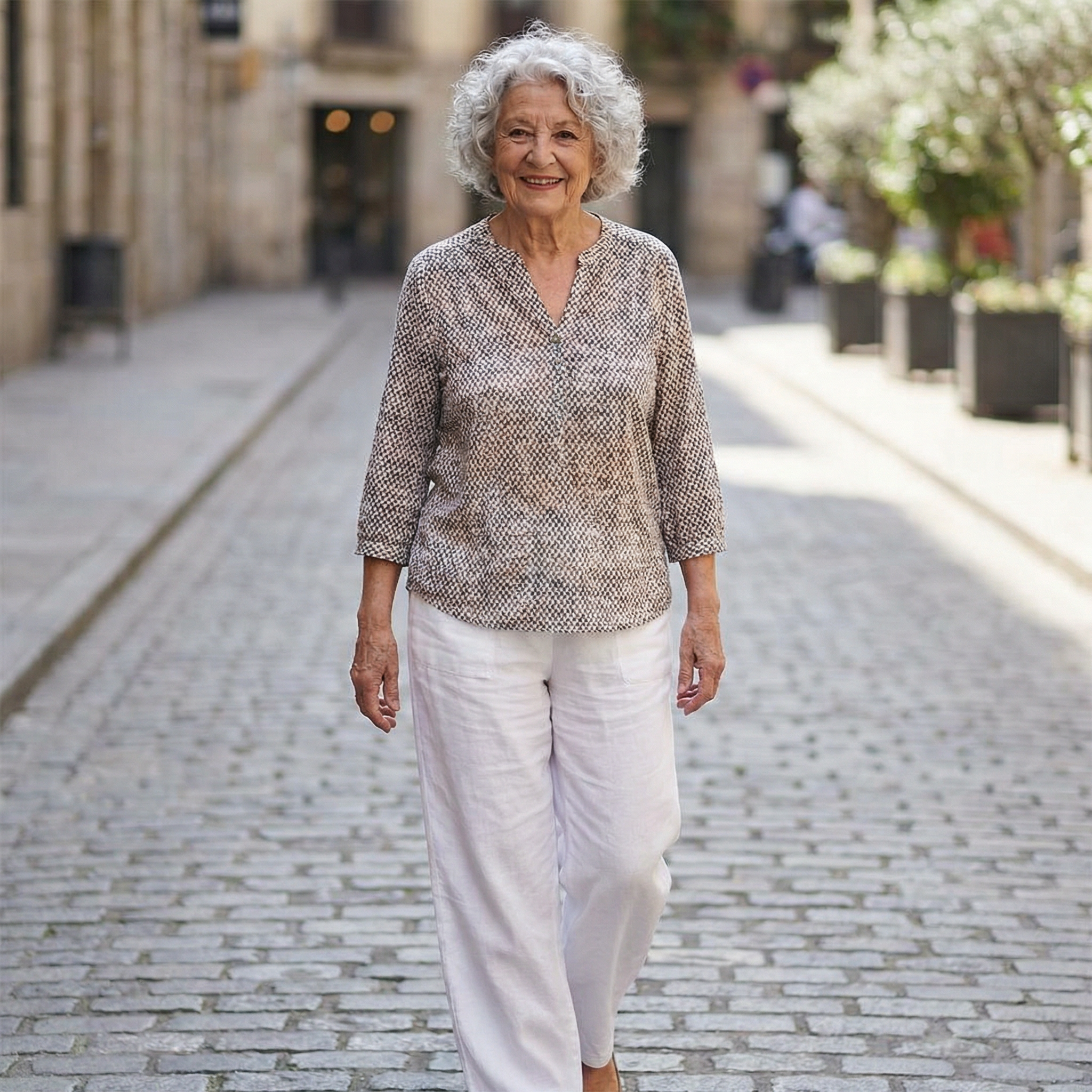


These are the little details that give a page its heartbeat. The sort of things a family reads and immediately says, “That is exactly her.”
Maggie loves roses, dahlias, sweet peas and telling George that he has watered the wrong thing. Her garden is cheerful, colourful and entirely under supervision.
She joins for the fresh air and stays because she is unexpectedly competitive. Nobody gets away with calling it “just a friendly game” after Maggie loses.
Her Victoria sponge is famous. The secret recipe is apparently “nothing special”, which is family code for absolutely nobody is getting it.
Strictly, a glass of something fizzy and a running commentary on everyone’s outfits. Maggie treated it like a public service.
Tissues, plasters, mints, receipts, a shopping list and a tenner “for emergencies”. Her handbag had better logistics than most companies.
“You won’t feel the benefit.” “Don’t come running to me.” “It’s not the money, it’s the principle.” And, naturally, “Have you eaten?”
On a rain-soaked holiday in Tenby, the awning collapses at 6am. George panics, the children cry with laughter, and Maggie calmly makes tea for everyone before instructing three neighbouring campers how the job should be done.
Thank you for the way you made family feel important. For every birthday card, every thoughtful phone call, every lift, every packed lunch, every bit of advice and every time you somehow knew somebody needed checking in on.
Thank you for showing us that strength does not need to shout. Sometimes it looks like getting up, carrying on, making dinner, caring deeply, laughing loudly and still having room for everybody else.
We love the stories you tell, the things you remember and the small traditions you create without even realising it. The way you fuss over us is one of the ways we know we are loved.
We hope this birthday brings you all the warmth, laughter, cake, flowers and slightly over-the-top attention you deserve. You have spent eighty years being there for everybody else. Today, it is our turn to celebrate you properly.